
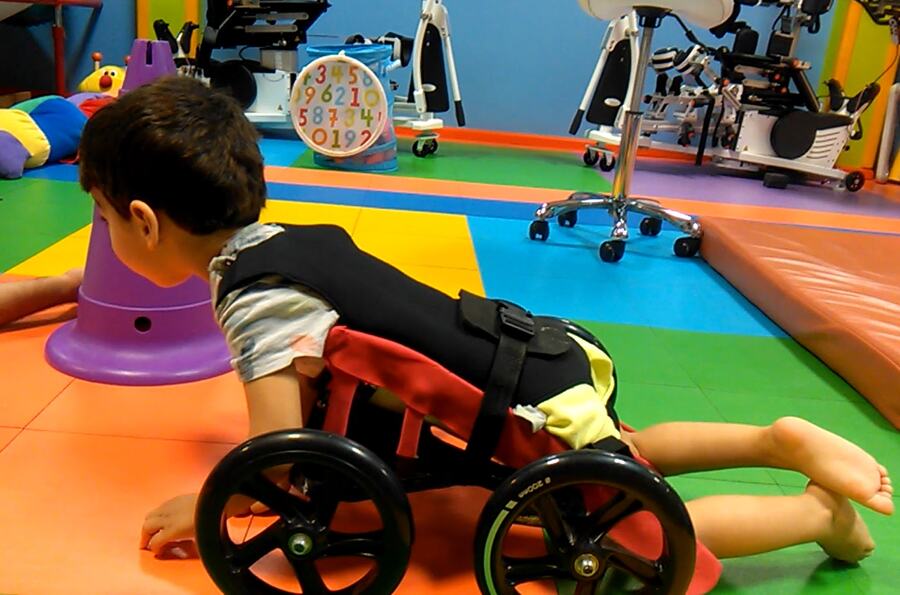
What is prone positioning?
Prone positioning simply means placing the child face down (prone) in a controlled and comfortable manner. It is a position that many families intuit naturally, but in children with motor difficulties it needs a little support to make it safe and useful.
Face down, the body works against gravity in a different way: the head tends to rise, the trunk straightens and the arms are free to explore what is in front. That is why it is one of the richest postures for the development of postural control, as long as it is offered progressively and with adequate supervision.
What does working upside down provide?
The prone position favours three things that are difficult to train in other positions. First, head control: when lying face down, the child practises the gesture of raising and holding the head. Second, the straightening of the trunk, which is the basis for sitting and, later, for standing. And third, the voluntary use of the arms and hands, which are available for reaching, pushing or supporting oneself.
In addition, keeping the child's hips and legs in a good position during these times helps to take care of the joints in the long term. A sustained and comfortable stretch of the hip muscles helps prevent deformities such as hip flexion, a common concern when spending a lot of time sitting or lying on your back.
The Ibaitator floor mover
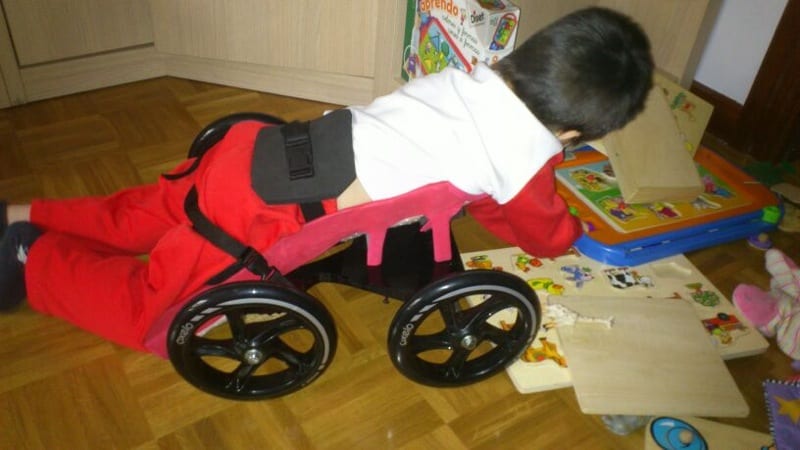
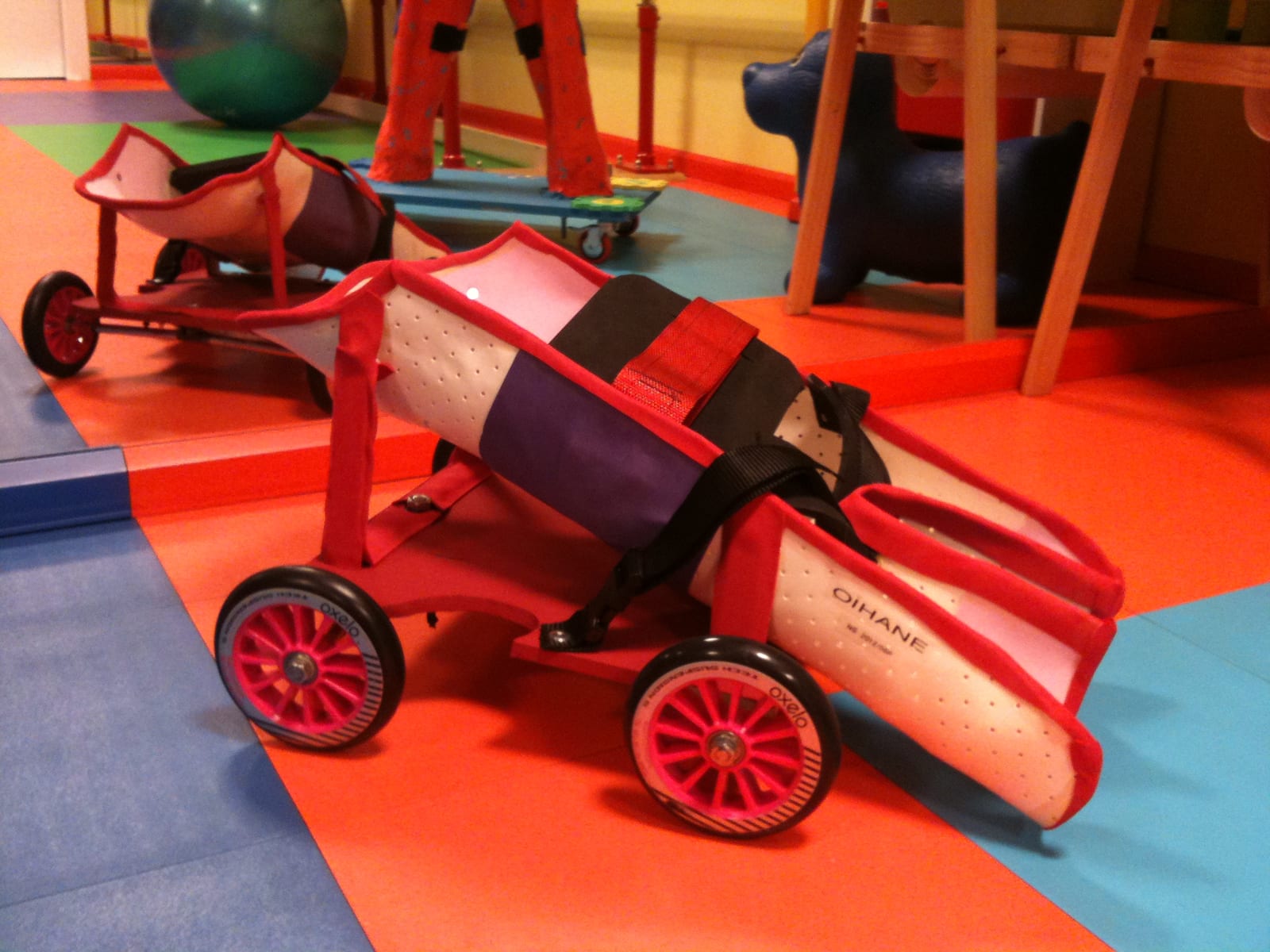
When prone becomes more than just a specific posture, there are technical aids designed to support it. One of them is the Ibaitator floor mover, a mould made to measure in rigid or semi-rigid material, covered on the inside with an anti-decubitus material and with different support systems for the hips and legs. The child rests on it, maintaining a stable prone position.
That mould is mounted on a chassis with a solid platform, two fixed rear wheels and two rotating front wheels linked by an axle. Thus, the child can move in any direction using his or her own arms. It is important to understand that it is made to measure: each body is different and the support must be adjusted to each person.
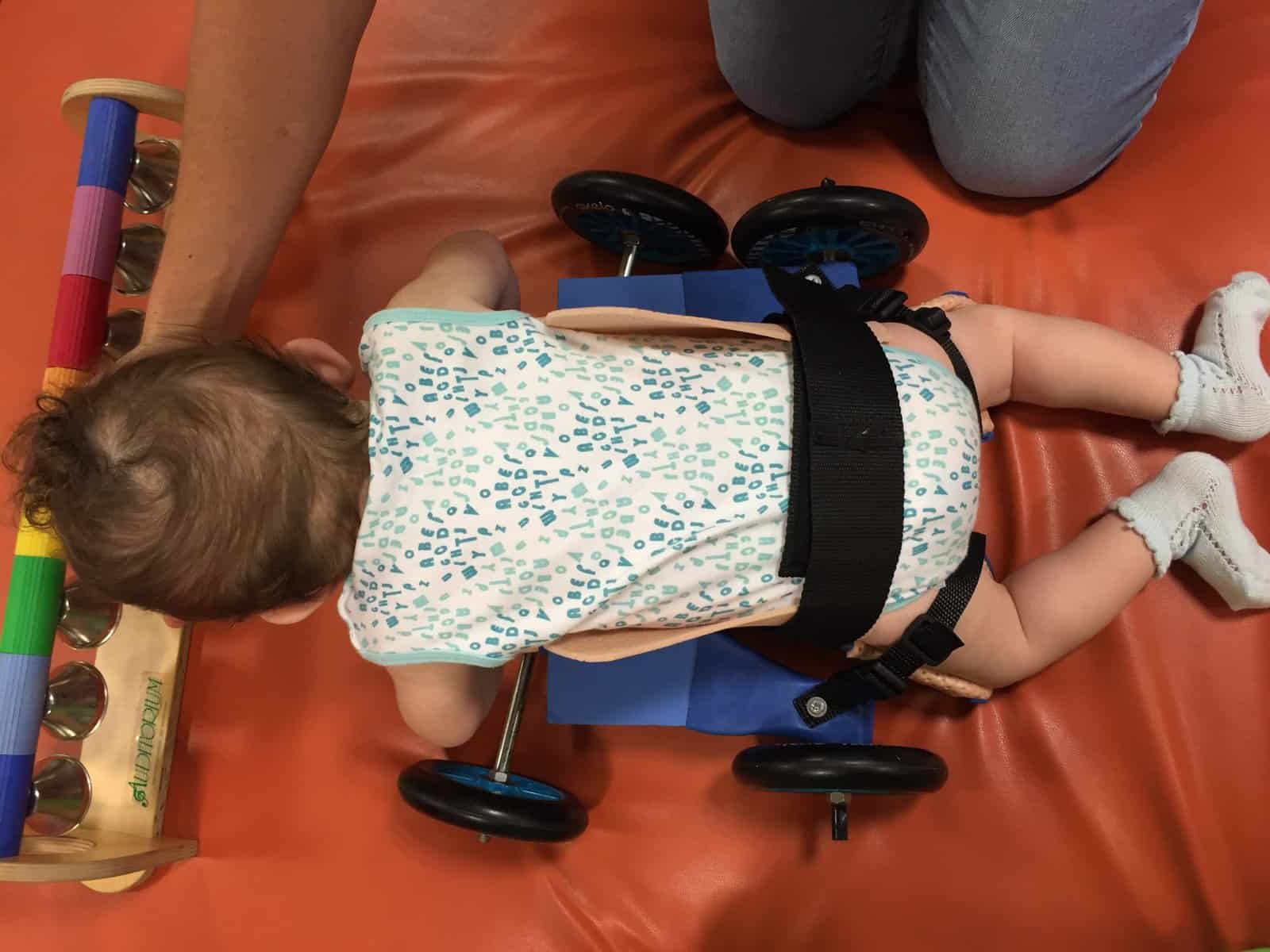
The triple function of the displacer
A floor mover fulfils, at the same time, three functions that should be clear. The first is preventive: by keeping the hips and legs well positioned, it helps avoid hip flexion and subluxation, achieving a sustained stretch of the iliopsoas and rectus femoris.
The second is postural development: it encourages trunk straightening and head control, two key milestones. The third is autonomy: it encourages voluntary movements of the arms and allows the child to move independently indoors. That feeling of moving alone, of deciding where to go, has a value that goes far beyond the physical.
How to introduce prone safely
The key is in progression. It is not about keeping the child face down for a long time from the beginning, but about starting with short periods and increasing them according to tolerance and comfort. It is advisable to choose times when the child is rested and receptive, never right after eating, and offer stimuli in front of him (a toy, a familiar face) that invite him to raise his head.
Adult supervision is essential during these times, especially at the beginning and always with children who do not yet have good head control. And before incorporating a technical aid such as a custom floor mover, it is reasonable to have the assessment of a professional, who will adjust the support and posture to each specific case.
If you want to understand which positioning options fit your situation, we can advise you without obligation and accompany you every step of the way.
We'll let you know when the next guide is out.
Occasional updates and guides for families. Unsubscribe whenever you like.
Would you like us to review it with you?
We guide you on the best option for your case, without obligation.