
Introduction
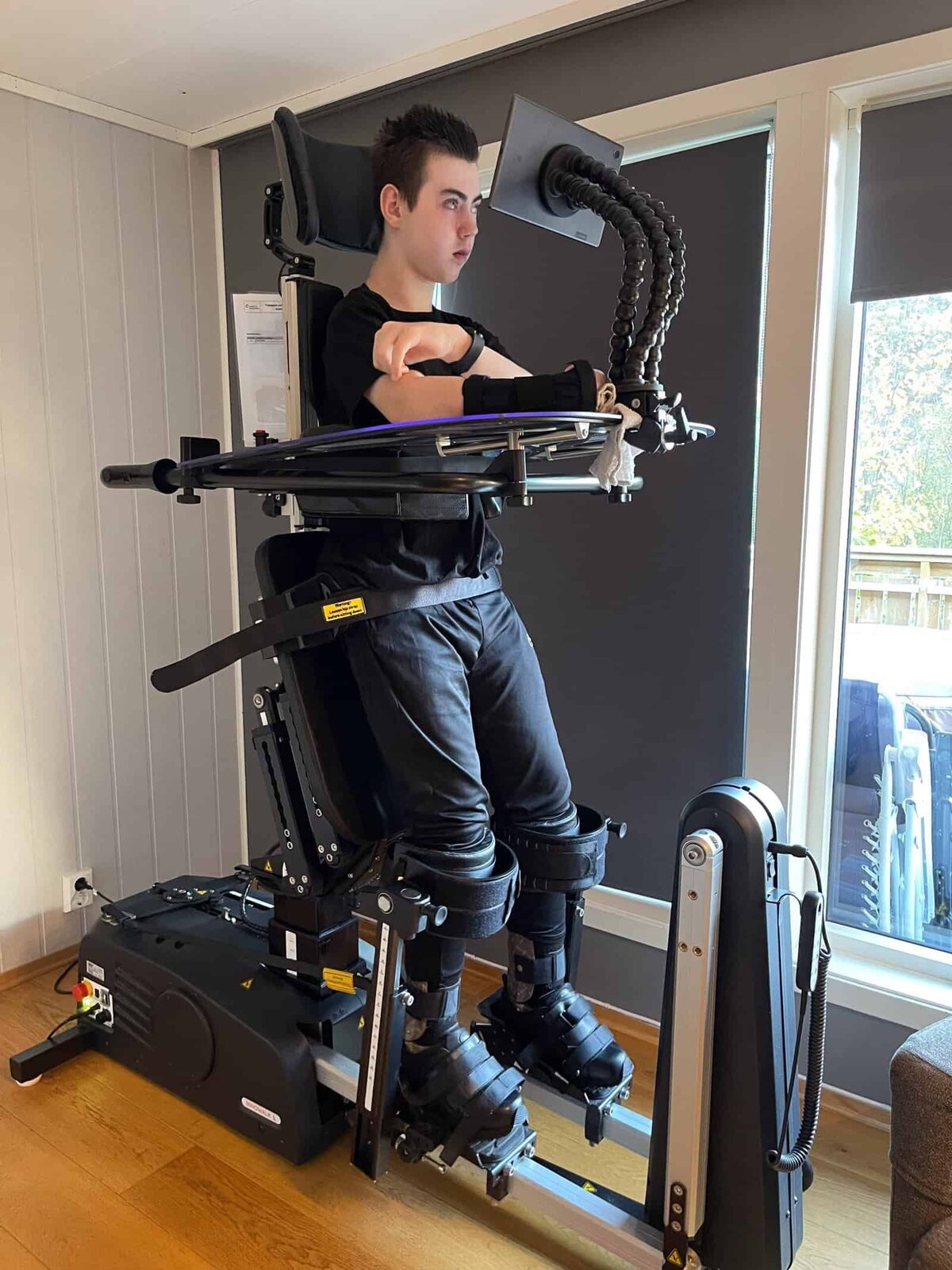
Children, young people and adults with motor disabilities often face significant barriers to accessing intensive, whole-body therapeutic exercise, especially those with moderate or severe mobility impairment. Assisted dynamic standing with robotic devices such as the Innowalk Pro allows repetitive weight-bearing movement with the user's active participation, supporting functional training across different levels of motor impairment.
Recent evidence suggests benefits for mobility, quality of life, exercise tolerance and a range of functional parameters. Daily clinical experience also shows relevant applications both in intensive rehabilitation and in post-surgical recovery.
Aim
To show the clinical applicability of robotic therapy through dynamic standing and to present functional outcomes observed in real cases of children and adolescents with CP and other neurological conditions.
Materials and methods
We present several real clinical cases treated in different care settings using Innowalk Pro as a therapeutic adjunct. Interventions included intensive programmes of 6–12 weeks and post-surgical applications with functional follow-up.
Changes were analysed in:
- Spasticity
- Postural stability
- Passive range of motion (PROM) of the hip
- Step length and gait efficiency
- Weight-bearing tolerance
- Bowel pattern
- Pain
- Participation and quality of life
Recent scientific literature on dynamic standing and robotic therapy in paediatric populations with neurological disabilities was also reviewed.
Results
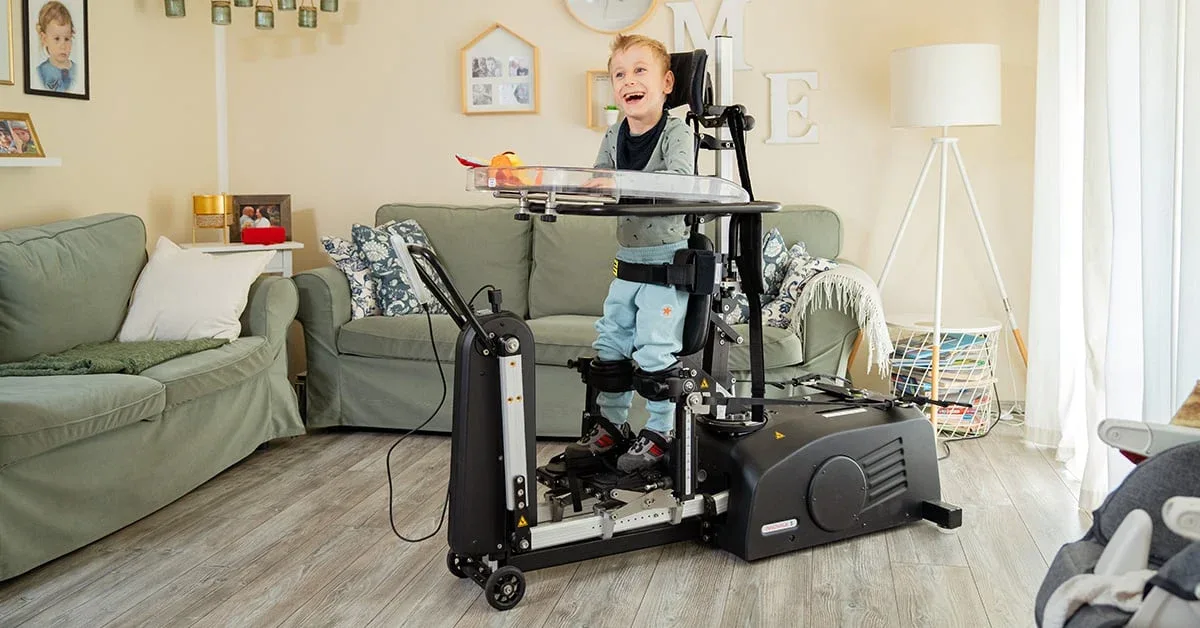
The clinical cases showed relevant functional improvements across different patient profiles.
In a 15-year-old adolescent with CP, GMFCS III, who had lost independent walking after the pubertal growth spurt, a daily intensive programme was associated with functional recovery of independent walking within two weeks and later improvement in stair climbing.
In another adolescent, GMFCS III, immediate changes were observed after 10 minutes of using the device, with longer step length, better foot clearance and lower apparent energy expenditure during walking.
A 6-year-old child, after an Achilles tendon tenotomy, showed a significant improvement in gait, moving from GMFCS II to GMFCS I after six months of neurorehabilitation and robotic therapy with the Innowalk Pro.
In post-surgical patients, early mobilisation was well tolerated, function was better preserved and gait recovered progressively.
It also proved useful in patients with severe neurological involvement, including high cervical spinal cord injury and neurodegenerative diseases, giving them safe access to the physiological benefits of dynamic standing.
36%quality of life
88%functional goals
The literature reviewed supports these findings. The HEROIC Trial showed improvements of 36% in quality of life and 88% in functional goals after six weeks of intervention in a school setting. Other studies describe reduced systemic inflammation and a better metabolic response after dynamic standing sessions.
Conclusions
Robotic therapy through dynamic standing with Innowalk Pro is a feasible, safe and well-tolerated intervention in children and adolescents with neurological conditions.
Clinical experience and the available evidence suggest relevant functional benefits for mobility, participation and quality of life, both in intensive rehabilitation and in post-surgical recovery.
Further controlled studies are needed to define optimal protocols for intensity, duration and long-term maintenance.
References
Grodon C, Bassett P, Shannon H. The heROIC trial: does the use of a robotic rehabilitation trainer change quality of life, range of movement and function in children with cerebral palsy? Child Care Health Dev. 2023;49(5):914–924.
Lundström P, Lauruschkus K, Andersson Å, Tornberg ÅB. Acute response to one bout of dynamic standing exercise on blood glucose and blood lactate among children and adolescents with cerebral palsy who are nonambulant. Pediatr Exerc Sci. 2022;34(2):93–98.
Tornberg ÅB, Lauruschkus K. Non-ambulatory children with cerebral palsy: effects of four months of static and dynamic standing exercise on passive range of motion and spasticity in the hip. PeerJ. 2020;8:e8561.
We'll let you know when the next guide is out.
Occasional updates and guides for families. Unsubscribe whenever you like.
Would you like us to review it with you?
We guide you on the best option for your case, without obligation.